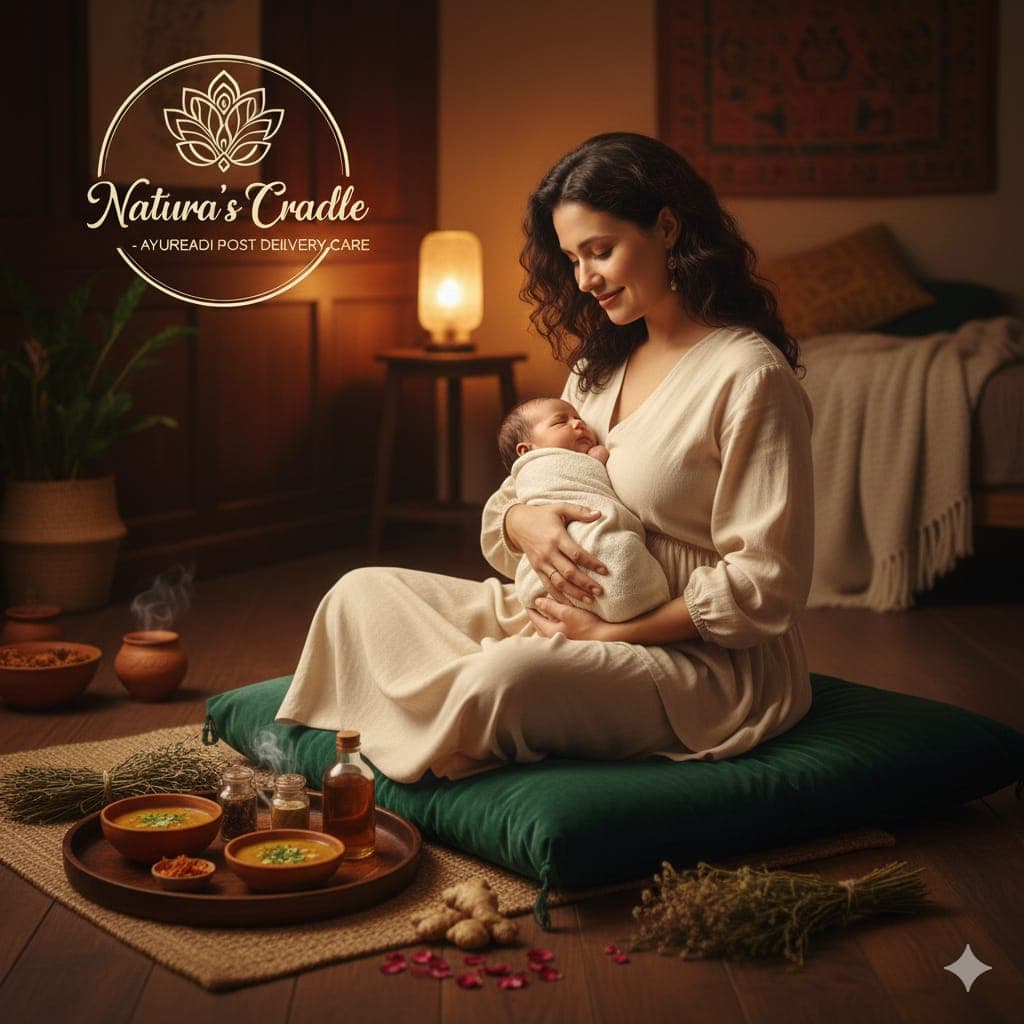
Sutika Paricharya is the Ayurvedic system of postnatal care designed to restore the health of the mother and support the healthy growth of the newborn baby. The period after childbirth is considered extremely delicate in Ayurveda. During this time, the mother’s body undergoes healing, hormonal adjustment, and emotional transition, while the newborn adapts to life outside the womb.
Ayurveda emphasizes that the first 40 days after delivery are crucial for lifelong health of both mother and baby. Proper diet, lifestyle, massage, and emotional care during this period help prevent long-term physical weakness, digestive issues, joint pain, hormonal imbalance, and emotional disturbances.
Understanding the Post-Delivery Phase in Ayurveda
According to Ayurveda, childbirth leads to a significant increase in Vata dosha in the mother’s body. There is loss of body tissues, weakness of digestion, and depletion of energy. If Vata is not properly balanced during the postnatal period, it may result in body aches, back pain, anxiety, delayed recovery, poor lactation, and fatigue.
Sutika Paricharya focuses on:
Restoring digestive fire
Pacifying aggravated Vata
Nourishing body tissues
Supporting lactation
Promoting emotional stability
Duration of Sutika Paricharya
Traditionally, Sutika Paricharya is advised for 40 days after delivery. This duration allows the uterus to return to its normal state, tissues to rebuild, hormones to stabilize, and breastfeeding to become well established.
Care of the Mother During Sutika Paricharya
Dietary Guidelines for the Mother
The post-delivery diet should be warm, nourishing, light to digest, and prepared fresh at home.
First 7 days after delivery
During this period, digestion is weak and the body needs gentle nourishment.
Recommended foods:
Warm rice gruel or thin porridge
Moong dal water or soup
Warm milk in small quantities, if tolerated
Light herbal preparations with cumin, ajwain, and dry ginger
Avoid:
Cold, raw, or refrigerated foods
Fried and heavy meals
Curd, bakery items, and carbonated drinks
Days 8 to 21
As digestion improves, slightly heavier foods can be introduced.
Recommended foods:
Soft khichdi with ghee
Vegetable soups such as bottle gourd, ridge gourd, and carrot
Chapati made from wheat or millet in small quantity
Milk with turmeric or dry ginger
Days 21 to 40
The body gradually regains strength.
Recommended foods:
Balanced home-cooked meals
Good quality ghee and sesame oil in moderation
Dry fruits such as almonds and dates
Jaggery and sesame preparations for strength
Herbal Drinks and Decoctions
Ayurvedic postnatal herbal drinks help improve digestion, reduce gas, support uterine cleansing, and enhance breast milk production.
Commonly used herbs:
Ajwain
Cumin
Fennel
Fenugreek
Dry ginger
Preparation method:
Boil one teaspoon of the herbal mixture in one cup of water until it reduces to half. Strain and consume warm once or twice daily, as advised by an Ayurvedic practitioner.
Oil Massage and Bath for the Mother
Gentle oil massage is an important part of Sutika Paricharya. It helps calm Vata, relieve muscle tension, and promote circulation.
Massage can usually be started 5 to 7 days after delivery, depending on the mother’s condition and medical advice.
Recommended oils:
Warm sesame oil
Dhanwantaram oil or Bala oil
Benefits:
Reduces back and joint pain
Improves muscle tone
Promotes relaxation and sleep
After massage, a warm water bath is advised. Exposure to cold air and cold water should be avoided.
Care of the Newborn Baby
Newborn care in Ayurveda focuses on warmth, gentle touch, and nourishment through breast milk.
Baby Oil Massage
Daily oil massage helps in physical development and emotional bonding.
Recommended oils:
Sesame oil in cooler climate
Coconut oil in warmer climate
Method:
Massage gently with soft strokes
Circular motion on the abdomen in clockwise direction
Avoid pressure on the umbilical area
Benefits:
Promotes weight gain
Improves sleep
Relieves gas and colic
Strengthens muscles and joints
Bathing the Baby
After massage, the baby should be bathed with warm water in a draft-free environment. Immediately after the bath, the baby should be dried and wrapped in warm clothing.
Feeding and Nutrition for the Baby
Ayurveda considers mother’s milk as the best and complete food for the newborn. Exclusive breastfeeding for the first six months provides nutrition, immunity, and emotional security.
The quality of breast milk is influenced by the mother’s diet, digestion, and emotional state. Therefore, calmness, rest, and proper nutrition of the mother are essential.
Emotional and Mental Care of the Mother
Post-delivery emotional changes are common due to hormonal fluctuations. Ayurveda emphasizes emotional nourishment along with physical care.
Helpful practices include:
Adequate rest and sleep
Emotional support from family
Avoiding stress and over-stimulation
Maintaining a calm and peaceful environment
If sadness, anxiety, or mood disturbances persist, timely professional support is recommended.
Precautions During Sutika Paricharya
Avoid excessive physical activity
Avoid exposure to cold wind and cold water
Avoid irregular routines and late nights
Avoid self-medication or herbal remedies without guidance
Conclusion
Sutika Paricharya is a time-tested Ayurvedic approach that supports complete healing of the mother and healthy development of the newborn. When proper diet, massage, rest, and emotional care are followed during the first 40 days after delivery, it lays a strong foundation for lifelong health, vitality, and emotional well-being for both mother and child.
This sacred postnatal period should be respected, protected, and nurtured with care, warmth, and traditional wisdom.
Ayurveda emphasizes that the first 40 days after delivery are crucial for lifelong health of both mother and baby. Proper diet, lifestyle, massage, and emotional care during this period help prevent long-term physical weakness, digestive issues, joint pain, hormonal imbalance, and emotional disturbances.
Understanding the Post-Delivery Phase in Ayurveda
According to Ayurveda, childbirth leads to a significant increase in Vata dosha in the mother’s body. There is loss of body tissues, weakness of digestion, and depletion of energy. If Vata is not properly balanced during the postnatal period, it may result in body aches, back pain, anxiety, delayed recovery, poor lactation, and fatigue.
Sutika Paricharya focuses on:
Restoring digestive fire
Pacifying aggravated Vata
Nourishing body tissues
Supporting lactation
Promoting emotional stability
Duration of Sutika Paricharya
Traditionally, Sutika Paricharya is advised for 40 days after delivery. This duration allows the uterus to return to its normal state, tissues to rebuild, hormones to stabilize, and breastfeeding to become well established.
Care of the Mother During Sutika Paricharya
Dietary Guidelines for the Mother
The post-delivery diet should be warm, nourishing, light to digest, and prepared fresh at home.
First 7 days after delivery
During this period, digestion is weak and the body needs gentle nourishment.
Recommended foods:
Warm rice gruel or thin porridge
Moong dal water or soup
Warm milk in small quantities, if tolerated
Light herbal preparations with cumin, ajwain, and dry ginger
Avoid:
Cold, raw, or refrigerated foods
Fried and heavy meals
Curd, bakery items, and carbonated drinks
Days 8 to 21
As digestion improves, slightly heavier foods can be introduced.
Recommended foods:
Soft khichdi with ghee
Vegetable soups such as bottle gourd, ridge gourd, and carrot
Chapati made from wheat or millet in small quantity
Milk with turmeric or dry ginger
Days 21 to 40
The body gradually regains strength.
Recommended foods:
Balanced home-cooked meals
Good quality ghee and sesame oil in moderation
Dry fruits such as almonds and dates
Jaggery and sesame preparations for strength
Herbal Drinks and Decoctions
Ayurvedic postnatal herbal drinks help improve digestion, reduce gas, support uterine cleansing, and enhance breast milk production.
Commonly used herbs:
Ajwain
Cumin
Fennel
Fenugreek
Dry ginger
Preparation method:
Boil one teaspoon of the herbal mixture in one cup of water until it reduces to half. Strain and consume warm once or twice daily, as advised by an Ayurvedic practitioner.
Oil Massage and Bath for the Mother
Gentle oil massage is an important part of Sutika Paricharya. It helps calm Vata, relieve muscle tension, and promote circulation.
Massage can usually be started 5 to 7 days after delivery, depending on the mother’s condition and medical advice.
Recommended oils:
Warm sesame oil
Dhanwantaram oil or Bala oil
Benefits:
Reduces back and joint pain
Improves muscle tone
Promotes relaxation and sleep
After massage, a warm water bath is advised. Exposure to cold air and cold water should be avoided.
Care of the Newborn Baby
Newborn care in Ayurveda focuses on warmth, gentle touch, and nourishment through breast milk.
Baby Oil Massage
Daily oil massage helps in physical development and emotional bonding.
Recommended oils:
Sesame oil in cooler climate
Coconut oil in warmer climate
Method:
Massage gently with soft strokes
Circular motion on the abdomen in clockwise direction
Avoid pressure on the umbilical area
Benefits:
Promotes weight gain
Improves sleep
Relieves gas and colic
Strengthens muscles and joints
Bathing the Baby
After massage, the baby should be bathed with warm water in a draft-free environment. Immediately after the bath, the baby should be dried and wrapped in warm clothing.
Feeding and Nutrition for the Baby
Ayurveda considers mother’s milk as the best and complete food for the newborn. Exclusive breastfeeding for the first six months provides nutrition, immunity, and emotional security.
The quality of breast milk is influenced by the mother’s diet, digestion, and emotional state. Therefore, calmness, rest, and proper nutrition of the mother are essential.
Emotional and Mental Care of the Mother
Post-delivery emotional changes are common due to hormonal fluctuations. Ayurveda emphasizes emotional nourishment along with physical care.
Helpful practices include:
Adequate rest and sleep
Emotional support from family
Avoiding stress and over-stimulation
Maintaining a calm and peaceful environment
If sadness, anxiety, or mood disturbances persist, timely professional support is recommended.
Precautions During Sutika Paricharya
Avoid excessive physical activity
Avoid exposure to cold wind and cold water
Avoid irregular routines and late nights
Avoid self-medication or herbal remedies without guidance
Conclusion
Sutika Paricharya is a time-tested Ayurvedic approach that supports complete healing of the mother and healthy development of the newborn. When proper diet, massage, rest, and emotional care are followed during the first 40 days after delivery, it lays a strong foundation for lifelong health, vitality, and emotional well-being for both mother and child.
This sacred postnatal period should be respected, protected, and nurtured with care, warmth, and traditional wisdom.